

Inside A Tech Bro’s Mind: Revolutionary Technology Or Water Security
Most conversations about artificial intelligence treat it like magic floating in the cloud, disconnected from the ground beneath our feet. Yet from constructing massive data centres to keeping high-powered servers cool, AI carries a heavy water and resource footprint that demands a closer look. After all, every digital breakthrough still relies on very finite physical supplies. While the technological leap is exciting, it has sparked a debate—leaving us wondering where a techie stands in the middle of it all. Torn between working in the heart of this boom and experiencing water scarcity firsthand, insiders often face professional obligations that stop them from speaking freely. So we took it upon ourselves to put those unspoken thoughts into words here. Dive in, see if we got it right, and join the conversation below
Here is how that story sounds from inside the head of an AI engineer in Bengaluru:
I build AI systems in Bengaluru for a living, spending my week thinking about server loads, latency, and scale—and my mornings checking apartment WhatsApp groups to see if the water tanker has arrived. Living with both realities makes it hard to simply cheer on billion-dollar AI hubs when I know firsthand the water deficit they are being built on.
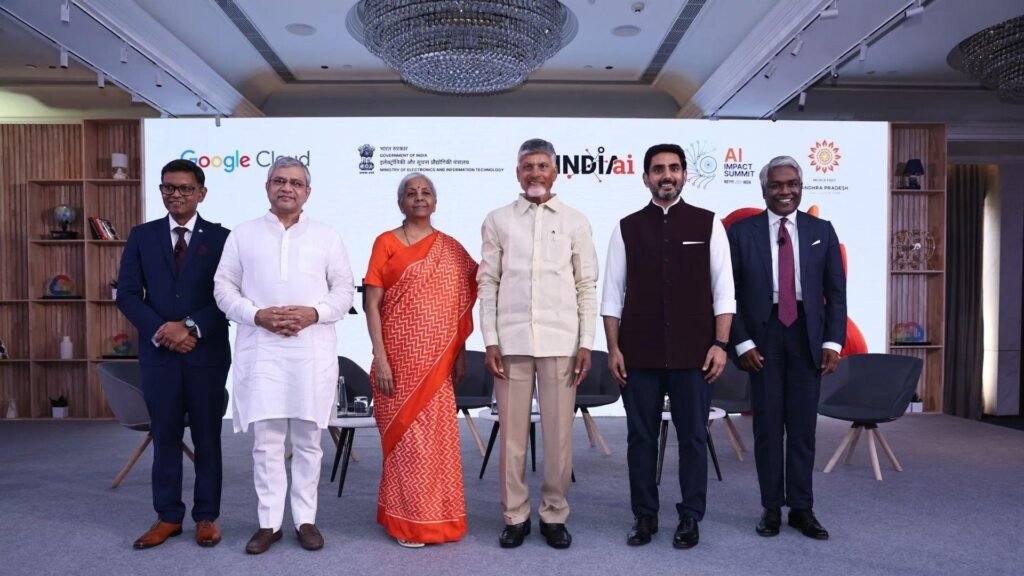
That is exactly what crossed my mind when I saw the headlines about Google’s $15 billion investment in an AI and data-centre hub in Visakhapatnam, Andhra Pradesh. A gigawatt-scale computing facility, new subsea cables, energy infrastructure and an entire AI ecosystem in the making.
My first reaction? Impressive.
My second? Wait. Has anyone calculated the water requirements?
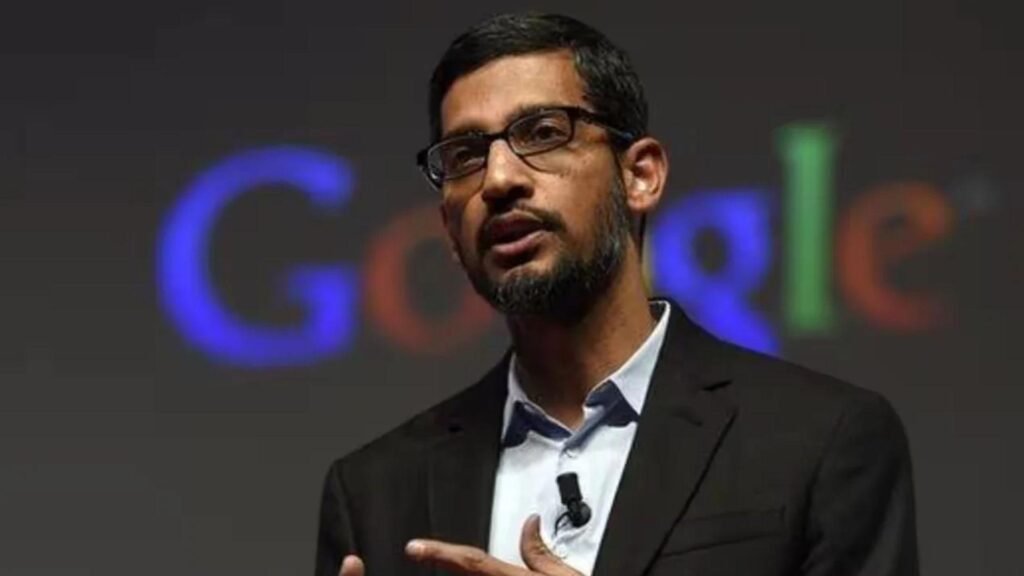
Interestingly, when Google CEO Sundar Pichai spoke at the AI Impact Summit in New Delhi in February 2026, he recalled travelling through Visakhapatnam as a student aboard the Coromandel Express on his way from Chennai to IIT Kharagpur—a quiet coastal city brimming with potential that is now set to house Google’s flagship AI infrastructure project. “No technology has me dreaming bigger than AI,” Pichai noted, framing artificial intelligence as a chance for emerging economies like India to leapfrog legacy infrastructure gaps.
And I get it. The vision is compelling. Yet from an engineering standpoint, a gigawatt-scale data centre demands rigorous dependency mapping. Compute capacity, GPU clusters, latency, and power loads are standard metrics in capacity planning. Water, however, rarely receives the same visibility—a contrast that feels particularly stark in a city like Bengaluru, where managing residential water supply often requires more contingency planning than a production deployment.
Bengaluru’s Water Dashboard Is Still in Beta
My apartment has an overhead tank, a tanker schedule and a WhatsApp group notification system that occasionally delivers the most disappointing updates of my day.
Water supply delayed. Tanker arriving shortly. Please use water judiciously.
According to WELL Labs, Bengaluru’s data centres consume an estimated 20 million litres of water daily. Research also indicates that several facilities operate in groundwater-stressed areas where surrounding agricultural communities depend on borewells, with a joint assessment flagging 60 Bengaluru wards as critical for groundwater depletion.
Here’s what bothers me. We have dashboards tracking server uptime, network latency, GPU utilisation and processing loads. Yet, tracking the water footprint of individual data centres remains a challenge.
For someone who spends his day looking at system metrics, that’s quite a monitoring gap.
Google, Visakhapatnam and a Rather Complicated Deployment
Google announced its $15 billion AI hub in Visakhapatnam on October 14, 2025, in partnership with AdaniConneX and Bharti Airtel. The proposed development includes a 1 GW data-centre campus, energy infrastructure and international subsea connectivity.
By August 2026, environmental activists and local groups were protesting concerns around water availability, environmental clearances, land allocation and proximity to Kambalakonda Wildlife Sanctuary.
One protest message caught everyone’s attention: “We cannot drink DATA.”
Honestly, even my AI summariser would struggle to improve that headline.
If you have lived through Bengaluru’s summer water crunches, the math in Vizag sets off alarm bells right away. The city gets around 410 million litres of water a day against a need of 480 million—meaning it was already running short before Google’s hub was even planned. Add heavy industrial demand on top of that, right next to the Mudasarlova reservoir and nearby wildlife habitats, and you can see why locals are worried about both water shortages and human-wildlife conflict.
In response, the Andhra Pradesh government rejected allegations that rural drinking-water supplies would be diverted, maintaining that strict safeguards would apply. Google, meanwhile, stated that advanced air-cooling technology would be deployed to minimise freshwater consumption. On August 24, 2026, the Andhra Pradesh High Court declined to halt construction, directing the government to produce relevant project documents while allowing development to proceed under ongoing judicial scrutiny.

Cooling Systems: The Infrastructure Behind the Interface
Training and running AI models pushes chips to their limits, and all that computing power creates massive amounts of heat. To stop servers from frying, data centres rely on air, liquid, or water-based cooling—and each option comes with its own water and electricity bill.
Google’s commitment to air cooling in Vizag to save freshwater is encouraging, but I still want to see the full math: the water spent constructing the site, generating its power, and running its support systems.
We already measure water efficiency in this industry using Water Usage Effectiveness (WUE). I thinks it’s time companies stopped keeping those numbers behind closed doors and started reporting facility-level WUE, freshwater withdrawals, and recycled-water use as standard practice.
Karnataka Enters the Policy Arena
On September 18, 2026, Karnataka approved its Sustainable Data Centre Policy 2026–2031, targeting 1 GW of cumulative data-centre IT capacity by 2031 and 10–12% of India’s AI-ready data-centre ecosystem.
The policy brings resource mapping, advanced cooling, renewable energy, wastewater recycling and plant-wise water and energy reporting into the infrastructure conversation.
There’s also a proposed 500 MW data-centre park near Hoskote, with access to 60 million litres daily of secondary-treated wastewater, requiring further treatment by industries.
This is where things get interesting. Bengaluru generates substantial wastewater, creating an opportunity to support industrial requirements through better treatment and reuse. Maharashtra’s ₹500 crore wastewater reuse policy offers another example worth studying.
The policy is a promising first deployment. Now comes the testing phase: actual consumption data, independently verified outcomes and evidence that freshwater demand is declining. Better groundwater recharge and water sustainability should also remain part of the conversation.
My Next Infrastructure Update Wishlist
Google’s 2026 Environmental Report says its water-stewardship projects replenished approximately 7.7 billion gallons in 2025, equivalent to 78% of its total freshwater consumption. Its goal is to replenish more freshwater than it consumes, on average, across its offices and data centres by 2030.
That’s meaningful progress. But, I’d still like to see how these commitments translate into local watershed improvements around individual facilities.
Every new data-centre deployment should come with a water baseline, a transparent consumption dashboard, efficient cooling architecture and continuous monitoring of groundwater and household access, and corporate water-risk management taken seriously.
I Work on the Future. I’d Like It to Have Water.
It’s evening. Somewhere, a server is processing millions of requests. Somewhere else, engineers are improving cooling systems.
And my apartment WhatsApp group has just announced another tanker delay.
I suppose every system has dependencies. Mine currently include caffeine, internet connectivity and a reasonably functioning overhead tank.
I want India’s AI ambitions to succeed. I want better infrastructure, smarter cooling, wastewater reuse and responsible resource management to become standard operating procedures.
I can help build AI that answers increasingly difficult questions. I’d still like to live in a Bengaluru where turning on the tap isn’t the day’s most unpredictable technology. That is the conversation we need to have out loud—not just in apartment WhatsApp groups, but in every boardroom signing off on the next big build.
Stepping back out of the techie’s shoes—the good news is that data centres can run on far less water—here are a few proven ways companies can build water resilience, which we broke down in Corporate Water Risk: Rethinking Survival Strategy For The First Time.
What’s your take on the Vizag project and India’s new data-centre policies? Whether you’re living in Bengaluru or Andhra Pradesh, dealing with water shortages firsthand, or working in tech, tell us how you’re bringing resource consumption into the conversation!