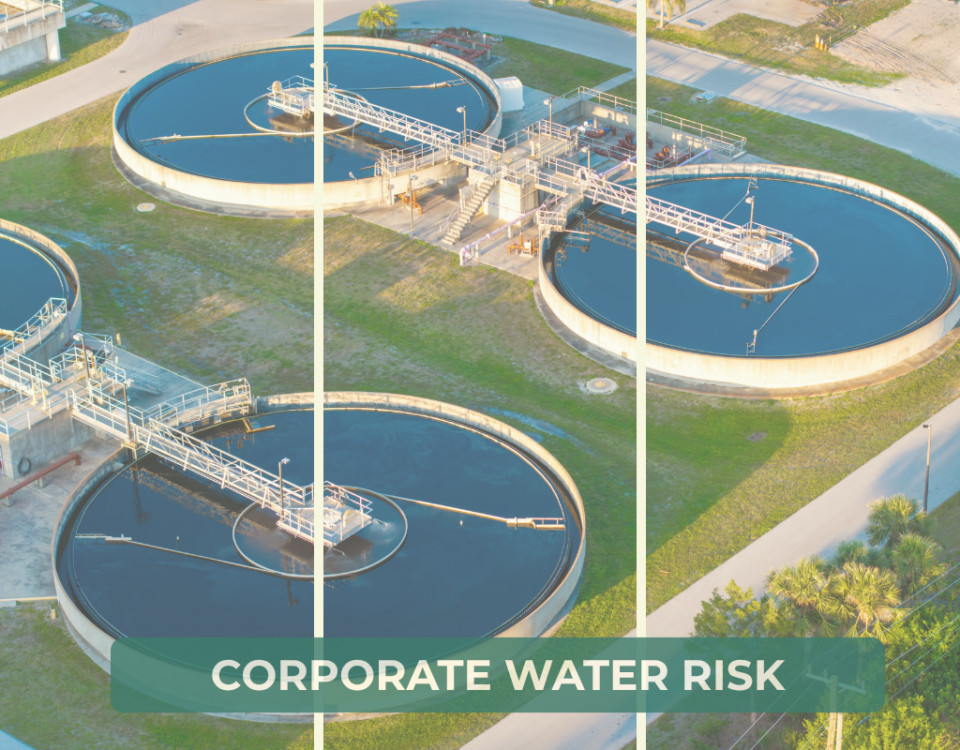
Corporate Water Risk: Rethinking Survival Strategy For The First Time
Companies are staring at $531 billion in potential water risk. And somehow, “turn off the tap” is still considered a core sustainability strategy!
Corporate sustainability has become exceptionally good at counting things. Carbon reduced, energy saved, waste diverted, litres consumed. Give every sustainability factor a dashboard, add a green gradient, and suddenly it looks like the planet has received a performance review. Water, unfortunately, did not get the memo.
According to CDP, 922 companies that disclosed both the potential financial impact of water risks and the cost of mitigation reported US$531 billion in potential financial impact from water risks.
Half a trillion dollars is a fairly difficult number to dismiss as “an environmental issue”. Yet water still tends to enter boardroom conversations as a utility bill, an ESG metric or an employee poster reminding everyone to close the tap.
And, that needs an upgrade!
The Litre-Counting Trap
Reducing water consumption matters. But celebrating lower consumption without understanding the water system around a business is a little like celebrating that your house uses less electricity while ignoring the fact that the power grid is collapsing.
A factory can become 20% more water-efficient and still sit in a severely water-stressed basin. A food company can optimise its processing while its agricultural supply chain remains heavily dependent on groundwater. A data centre can improve cooling efficiency while operating in a location where long-term water availability is already under pressure.
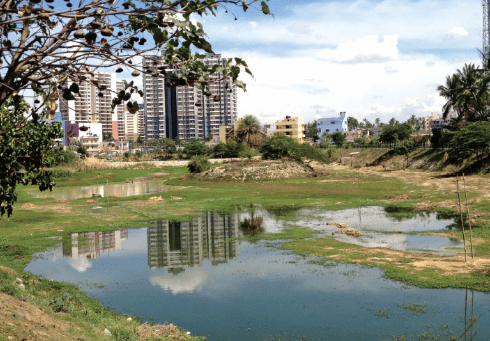
The uncomfortable truth is simple: your factory may have enough water. Your watershed might not.
That is the difference between water efficiency and water stewardship. One measures what the business uses; the other looks at whether the system supporting that business can remain healthy enough to support its next decade of growth.

Water Risk Does Not Stay in the Water Department
According to CDP, 1 in 5 companies reported supply-chain water risks that could significantly affect their business, while companies integrating suppliers into water-risk assessments were seven times more likely to report supply-chain risks.
The dependency can run through agricultural sourcing, manufacturing, suppliers, factory locations, community demand, groundwater availability, regulation and pricing.
Water risk rarely arrives wearing a badge that says “WATER RISK”. It usually arrives disguised as “supply disruption.” Identifying it is the real game-changer!
Water Is Becoming a Growth Constraint
The sustainability conversation is already moving beyond factory efficiency. Data centres, advanced manufacturing and other water-intensive infrastructure are forcing companies to think about water at the design and location stage, rather than after the plumbing is installed.
Microsoft reports that its average data-centre Water Usage Effectiveness improved from 2.3 litres per kWh in early generations to 0.27 litres per kWh in 2025, alongside a commitment to improve data-centre water-use intensity by 40% by 2030.
Google reported 165 water stewardship projects across 97 watersheds in 2025, replenishing approximately 7.7 billion gallons, equivalent to around 78% of its total freshwater consumption.
The message is becoming rather hard to ignore: water is no longer simply something operations consume. It is something growth depends on.
The Companies Already Doing Something About It
Thankfully, the corporate water story is not all depressing spreadsheets and sustainability PDFs with photographs of leaves.
Some companies are actually changing how the problem is approached.
- PepsiCo reported that more than 60 active projects helped replenish nearly 29 billion litres of water into local watersheds in 2025, alongside water-efficiency and agricultural initiatives.
- Amazon has invested in water stewardship initiatives across India, including projects focused on watershed restoration, lake rejuvenation, efficient irrigation and groundwater recharge.
Then come the innovators solving the less glamorous, but very real, parts of the problem.
- FluxGen uses IoT, analytics and real-time monitoring to help organisations identify water losses and optimise consumption.
- Fluid Robotics uses robotics, AI and monitoring technologies to address wastewater and urban water infrastructure.
- Uravu Labs is taking a wonderfully unconventional route: using low-grade waste heat to generate freshwater. The company says 1 MW of recoverable waste heat can produce up to 30,000 litres of freshwater per day, depending on operating conditions.
- EarthFokus works on water monitoring and recovery.
- BoreCharger and Urdhvam work around groundwater recharge, aquifer management and water security.
Different technologies. Different business models. Same lesson:
The future of water management is looking considerably more interesting than a CSR slide buried on page 47 of an annual report.

From “Use Less” to “Make the System Stronger”
The solution is not to replace efficiency with stewardship. It is to make efficiency the first layer of a much bigger strategy.
Businesses can start with five practical shifts:
- Map the real dependency: Connect facilities, suppliers, raw materials, watersheds and aquifers instead of assessing water risk only within the factory boundary.
- Set context-based targets: A 20% reduction means very different things in a water-abundant basin versus a severely stressed one. Targets need to reflect local realities.
- Build circularity: Reuse process water, recover water from cooling systems, treat wastewater for reuse and harvest rainwater wherever technically and economically viable.
- Invest where the water comes from: Groundwater recharge, wetland restoration, catchment improvement and watershed projects can strengthen the systems businesses and communities share.
- Put technology to work: Sensors, AI, geospatial data and real-time monitoring can identify leaks, abnormal consumption and infrastructure losses before they become expensive problems.
And there is one more shift that deserves attention: put water into procurement and capital allocation.
Water Needs a Seat at the Boardroom Table
The old sustainability question was:
“How much water did we save?”
The smarter business question is:
“How resilient is the water system our growth depends on?”
That shift moves the conversation from consumption to continuity, from compliance to resilience and from annual reporting to long-term planning.
Water stewardship is no longer simply about using fewer litres. It is about making sure there are healthy watersheds, functioning ecosystems, resilient communities and reliable water systems around the business for those litres to exist in the first place.
The irony is that businesses have spent years preparing for the future by talking about climate risk, supply-chain risk and infrastructure risk separately.
Water has been quietly sitting underneath all three.
And when the watershed starts struggling, the ESG report will not keep the production line running. Water will!
If your water strategy still begins and ends with “use less”, it is time for an upgrade.
Move from measuring litres to understanding risk, building circularity and strengthening the watersheds your business depends on.
Let us know more ways in which companies can make the water systems stronger. Share in the comments companies that have already adopted the new form of water stewardship. We’d love to feature them on our website.