World Lake Day: Your Business Probably Needs a Healthy Lake More Than You Think
We love lakes.
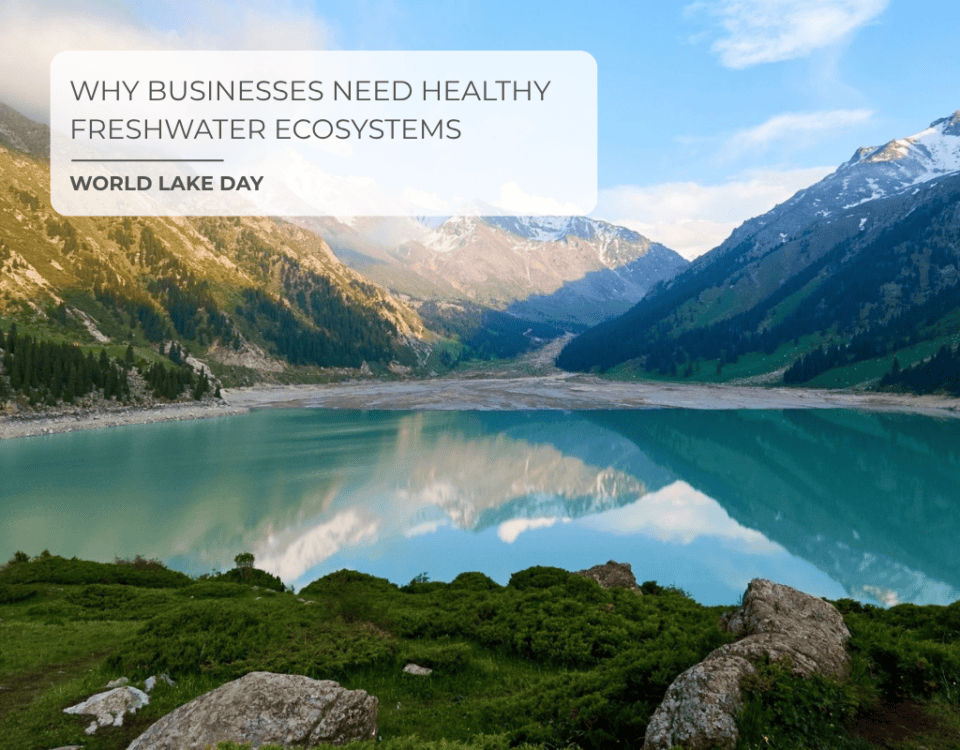
When they are blue. When there are mountains in the background. When the reflection is doing exactly what it needs to do for the Instagram grid.
But a lake is doing considerably more than looking pretty.
It stores freshwater, supports biodiversity, helps absorb floods, regulates local climate, supports agriculture, livelihoods and tourism, and keeps local economies moving.
In other words, that picturesque body of water is quietly doing a full-time job while we are busy calling it just “scenic.”
And on World Lake Day, on 27 August, perhaps it is time we looked at lakes not simply as scenic water bodies, but as some of the infrastructure that keeps both communities and economies running.
Because Apparently, Lakes Have a Job Too!
Water security? Check.
Biodiversity hotspot? Absolutely.
Agriculture and livelihoods? Yes.
Tourism and local economies? Also yes.
Climate and flood resilience? That too.
Lakes and reservoirs contain around 90% of the world’s unfrozen surface freshwater, while supporting food security, drinking water, irrigation, livelihoods, biodiversity and economic activity.
Quite the CV for something we mostly photograph at sunset!
The problem is that we have been treating these multifunctional ecosystems rather like an unlimited subscription.
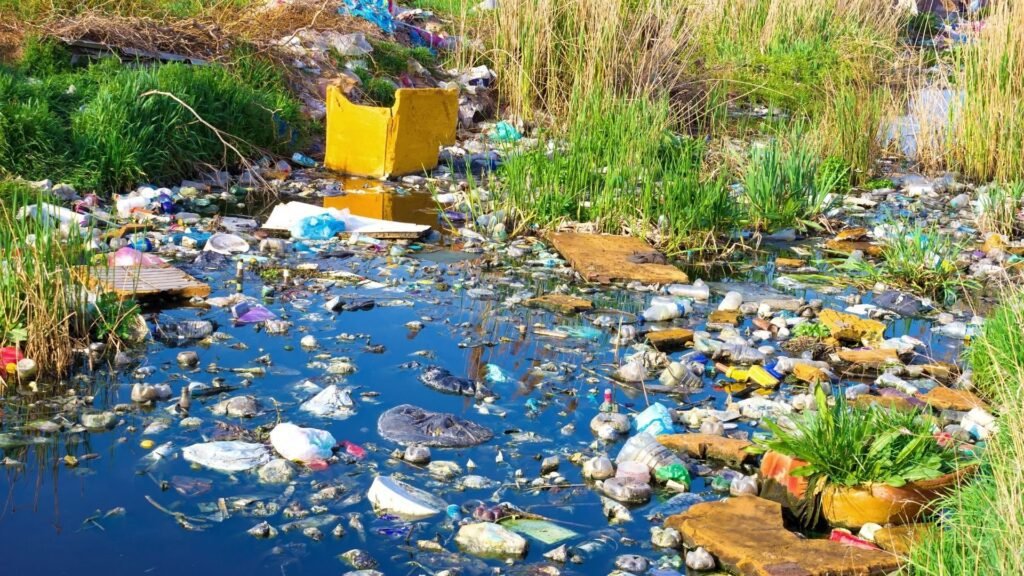
Pollution and untreated wastewater, agricultural and industrial runoff, over-extraction, urbanisation and encroachment, changing rainfall patterns and climate change are putting increasing pressure on lakes.
And when the lake loses, everyone downstream eventually gets the bill.
Some Lakes Are Basically Biodiversity Overachievers
Take Lake Tanganyika.
It holds around 17% of the world’s surface freshwater and is home to more than 1,500 species, including more than 250 endemic cichlid species. It also supports millions of people across four countries.
Yet unsustainable fishing, pollution, sedimentation and climate-related pressures are putting both biodiversity and livelihoods under strain.
The good news? Conservation here is increasingly moving beyond the “protect nature, preferably from a distance”model.
The Nature Conservancy and its partners have supported initiatives around Lake Tanganyika that work with communities, governments and NGOs, including community-led fisheries management and conservation efforts.
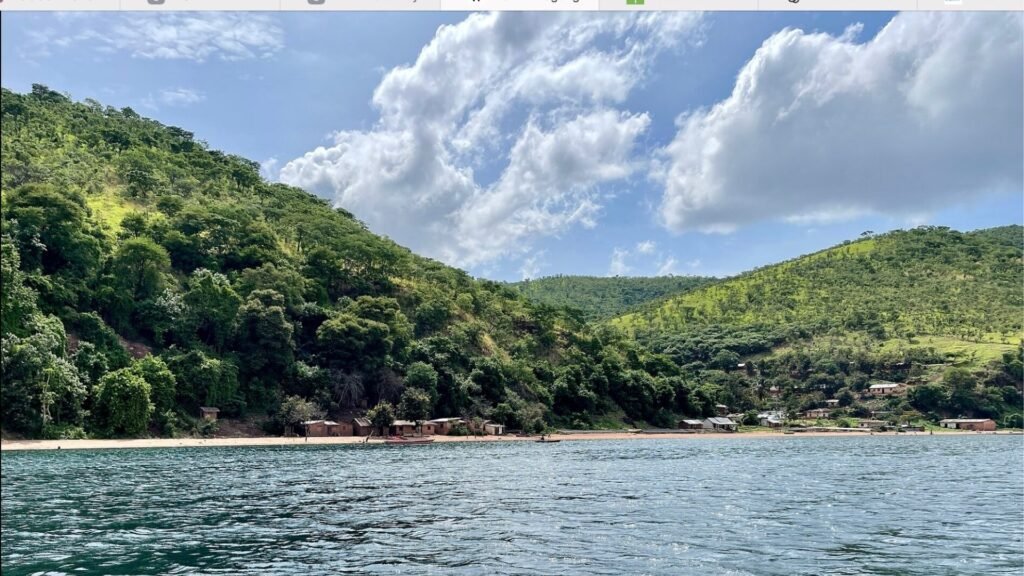
Then there is Lake Malawi, home to more than 850 fish species, over 90% of which are found nowhere else in the world.
Ripple Africa’s Fish for Tomorrow programme takes a distinctly community-first approach. It has established 474 Beach Village Committees, protecting 133 fish breeding sites across almost 736 km of Lake Malawi’s shoreline.
The lesson is fairly simple:
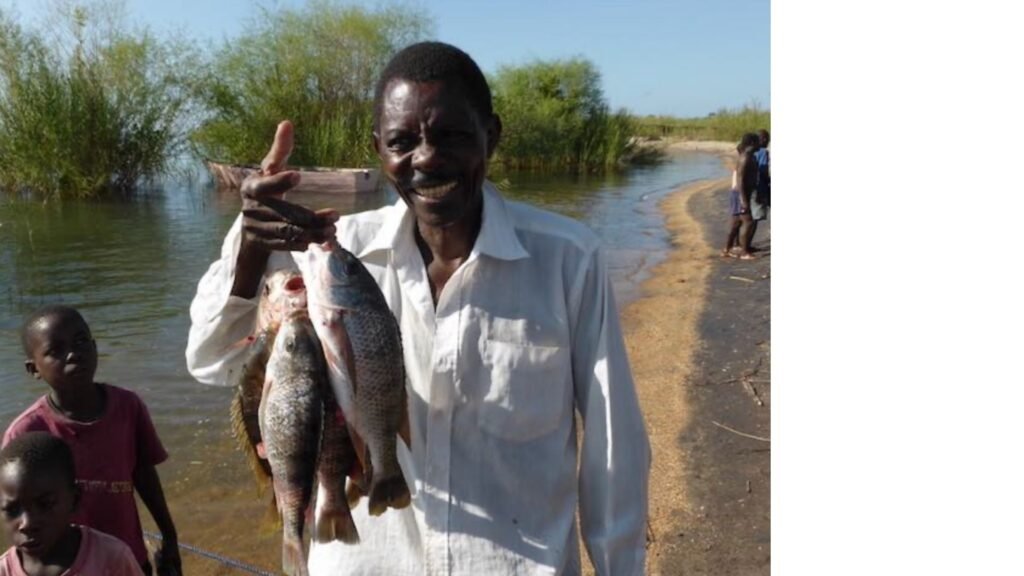
You cannot sustainably protect a lake while ignoring the people whose lives depend on it.
Because apparently, conservation works better when you include the humans who actually live there.
And This Is Where Business Gets Involved
You may be thinking: Lovely. But what does my business have to do with Lake Tanganyika?
Potentially, quite a lot.
A business does not have to sit beside a lake to depend on its water system.
Agriculture needs water. So does food and beverage. Textiles, manufacturing, energy and increasingly data centres have water dependencies running through their operations and supply chains.
Which means water risk is not just an environmental problem. It can become an operational, regulatory, supply-chain and reputational risk too.
And suddenly, the lake is on the balance sheet.
Sort of… yes!
Because your factory may be nowhere near a lake, but your supply chain probably doesn’t exist in a magical water-free dimension.
Water Efficiency Is Good. Water Stewardship Is Better.
Using less water is important.
Reusing and recycling it is better.
Rainwater harvesting and groundwater recharge help.
But perhaps the bigger shift is understanding that your water responsibility does not end at the factory gate.
So, What Can Businesses Actually Do For Real Water Circularity?
- Use less: Reduce water consumption across operations.
- Reuse more: Recycle and reuse water wherever possible.
- Harvest rain: Capture rainwater and recharge groundwater.
- Restore ecosystems: Invest in lakes, wetlands and watersheds.
- Protect water quality: Treat wastewater and prevent pollution at source.
- Think beyond the factory: Assess water impact across the entire watershed.
- Work together: Partner with governments, NGOs and local communities.
- Measure outcomes: Track what actually changes, not just what gets spent.
Because installing a water-efficient tap while the watershed outside is collapsing is, at best, sustainability with excellent plumbing!

Some Businesses Are Already Getting Their Hands Wet
There are examples emerging across India.
Infosys has undertaken lake rejuvenation projects with local stakeholders and NGOs. Its latest ESG reporting says 11 lake rejuvenation projects have added 4.3 billion litres of freshwater capacity, contributing to aquifer recharge, flood-risk mitigation and restoration of degraded water bodies.
Amazon India announced in 2026 that its operations in India had become water positive, alongside water-use reductions and watershed restoration and water-conservation initiatives.
Coca-Cola India has also supported lake rejuvenation and water-conservation initiatives involving activities such as desilting, sewage treatment, solid-waste management and weed/sludge management.
The point isn’t to hand out sustainability trophies.
It is to recognise that water stewardship is moving from nice-to-have CSR language towards business resilience.
So, What Should Corporates Actually Measure?
Not just how much money went into a lake project.
Because “we spent ₹X on restoration” tells you what you paid.
It does not necessarily tell you what changed.
A better sustainable water consumption checklist looks something like this:
- Water withdrawal: How much are you taking?
- Water consumption: How much are you actually using?
- Water quality: What are you putting back?
- Water-stress exposure: How vulnerable are your operations and supply chains?
- Watershed impact: What happens beyond your factory boundary?
- Restoration outcomes: Did the ecosystem actually improve?
- Biodiversity outcomes: Did species and habitats benefit?
- Community outcomes: Did the people dependent on that water system benefit?
In other words, don’t just measure the cheque.
Measure the change.
The Bigger Picture Is Bigger Than a Lake
Water security connects to climate resilience.
Climate resilience connects to biodiversity.
Biodiversity connects to livelihoods.
And all of it eventually connects back to business resilience.
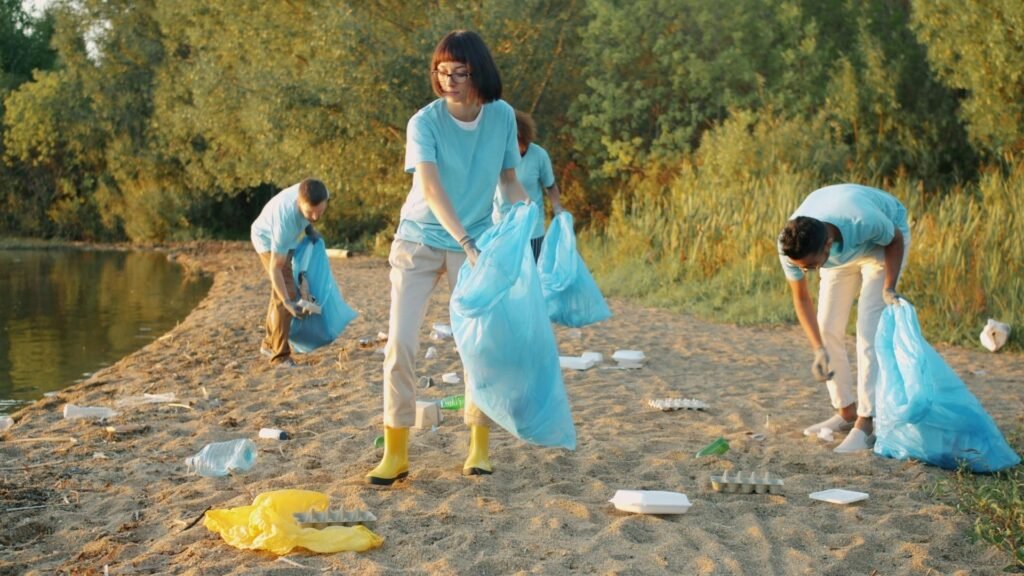
That is why the conversation needs to move from isolated CSR projects to long-term water stewardship – aligned with goals such as SDG 6, which calls for sustainable water management and includes the protection and restoration of water-related ecosystems.
Because a lake does not exist in a neat little “environment” box.
It connects ecosystems, communities, economies, agriculture, businesses and entire watersheds.
So perhaps the real World Lake Day question isn’t simply:
“How do we save our lakes?”
It is:
“How do we build businesses that don’t need healthy lakes to be somebody else’s problem?”
Because we shouldn’t have to choose between economic growth and healthy lakes.
Sustainable growth should protect both.