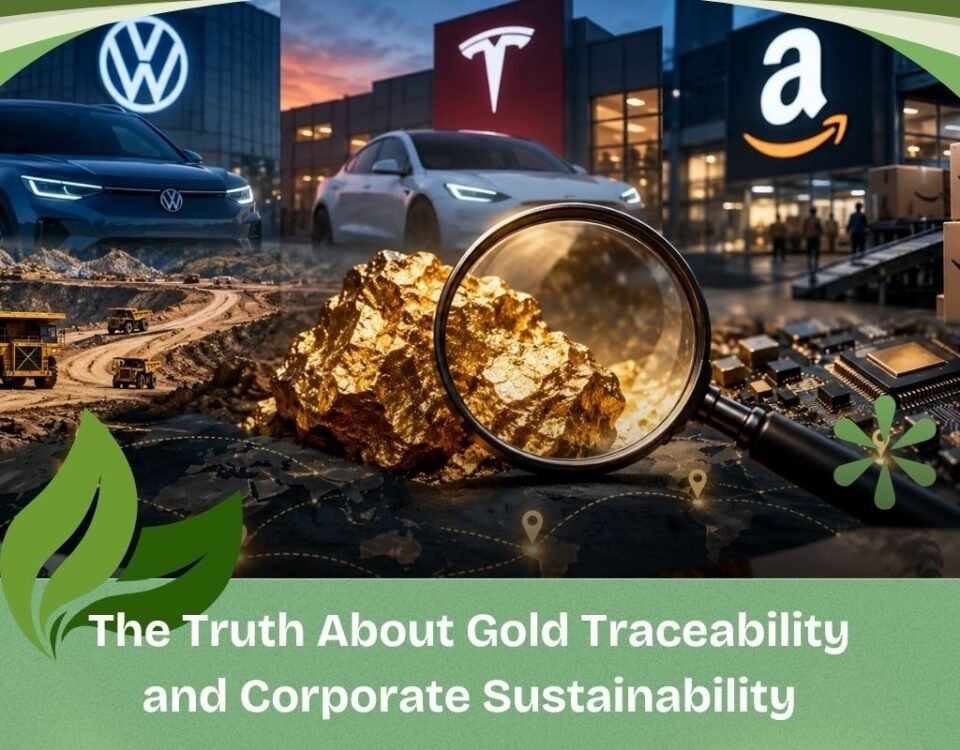
The Truth About Gold Traceability and Corporate Sustainability
Gold looks good in jewellery, electronics and investment portfolios. Its journey from mine to market can look considerably less reassuring. Mining can pollute water, damage ecosystems and expose workers and communities to serious risks. Yet companies buying gold may struggle to establish exactly where it came from and under what conditions it was extracted.
Volkswagen. Tesla. Amazon. Three global businesses named in a Financial Times investigation into potential connections between corporate supply chains and sanctioned gold refiners. The findings raise an uncomfortable question: how much can a company confidently say about the gold entering its supply chain?
Yet a Financial Times investigation found that more than 160 US companies and at least 10 foreign companies had listed sanctioned gold refiners as potential links in their supply chains.
The distinction matters: the disclosures did not establish direct commercial relationships between these companies and the refiners. They highlighted how difficult it can be to establish connections several steps upstream. That uncertainty becomes particularly important when the material in question has environmental, human-rights or conflict-related risks.
The visibility gap extends well beyond gold. The OECD’s 2026 Responsible Business Outlook found that, among approximately 450 large listed companies studied, almost 70% reported social audit coverage of at least some Tier 1 suppliers. Only around 30% covered Tier 2 suppliers and 20% covered Tier 3 suppliers.

Tier 1 Is a Dream. Tier 3 Is a Detective Series.
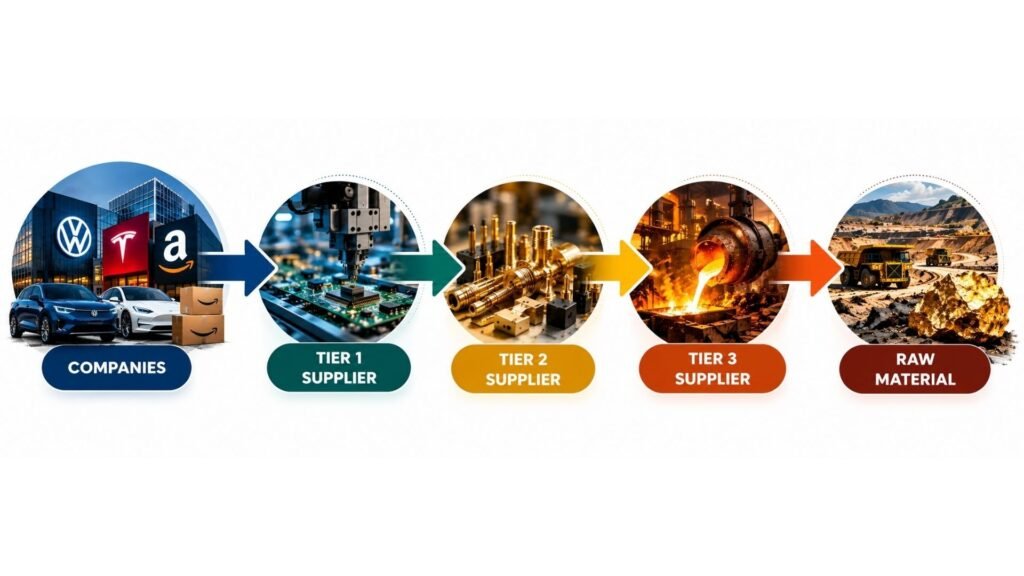
Gold supply chains have their own family drama. Gold moves from mines through local traders, aggregators, exporters and refiners before reaching manufacturers and buyers. Each handover creates another opportunity for records to become incomplete or difficult to verify. When gold from different sources is consolidated or blended, establishing its precise mine of origin becomes harder without reliable chain-of-custody records.
The OECD’s gold-specific due diligence guidance calls for information on mine of origin, processing locations, suppliers and the parties handling the material. Knowing which refiner supplied your gold is useful. Knowing where that refiner obtained it and what evidence supports its declared origin is a much bigger job.
A supplier list tells you who sends the invoice. A supply-chain map tells you who else might be in the story.

The Questionnaire Says Everything Is Fine. What a Relief.
Then comes the corporate favourite: the supplier questionnaire. Ask where the gold came from, collect a declaration, request a certificate and file everything neatly.
Lovely! But a supplier’s answer is only as reliable as the information behind it.
Except a declaration records what someone reports. It does not automatically establish what happened several tiers upstream.
For gold, questionnaires record declared origins, audits examine specific facilities, and certifications demonstrate compliance with defined requirements. All provide useful evidence, but none automatically verifies every gold input.
The paperwork may be complete while the investigation remains unfinished. Forms collect answers; they rarely reveal what nobody disclosed.
Companies must map suppliers beyond Tier 1, verify origin and chain-of-custody records, investigate inconsistencies and track corrective action. Where traceability remains incomplete, they should document gaps, assess risks and prioritise further investigation.
The OECD’s due diligence guidance provides a framework for identifying, preventing, mitigating and addressing supply-chain risks.
Gold Has a Headline. The Rest of the Supply Chain Has a Rap Sheet.
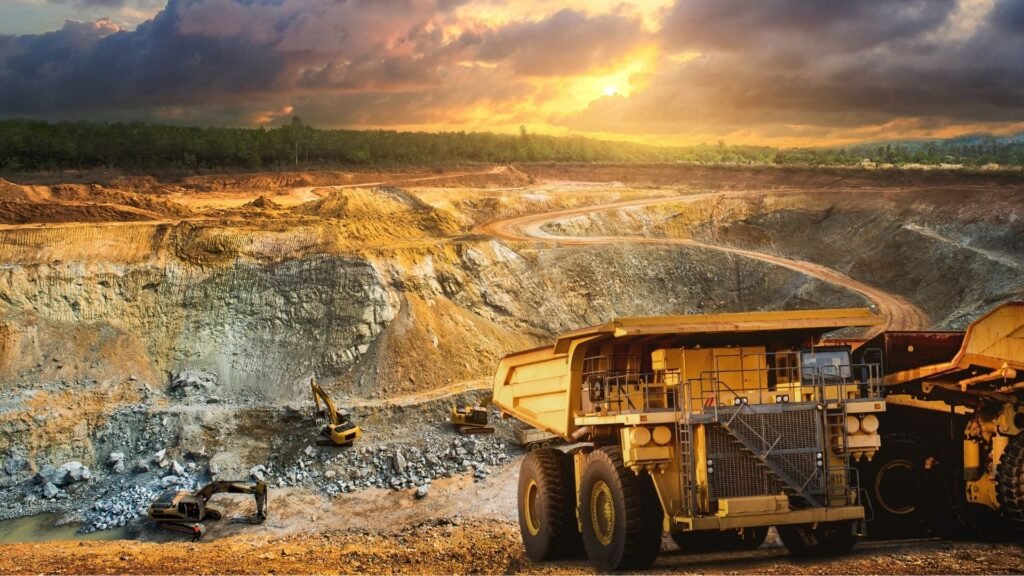
Gold mining brings its own set of sustainability concerns:
- Mercury pollution: Artisanal and small-scale gold mining is a major source of mercury emissions.
- Land and water damage: Mining and processing can disturb habitats, contaminate water and degrade local ecosystems.
- Worker and community risks: Unsafe working conditions, human-rights abuses and exploitation can occur in poorly governed operations.
- Conflict and illegal sourcing: Gold from high-risk areas may be associated with illegal extraction or the financing of armed groups.
Regulation is catching up. The EU Conflict Minerals Regulation requires covered EU importers of gold and certain other minerals from conflict-affected and high-risk areas to conduct due diligence.
Sustainability has outgrown the recycling posters. Better supply-chain visibility helps businesses spot risks early, strengthen compliance, make informed sourcing decisions and build trust. Without it, disruptions, regulatory exposure, costly investigations and unsubstantiated sustainability claims can follow.
Your Traceability Dashboard Is Gorgeous. Can It Prove Anything?
For gold, traceability tools can connect mine records, trader declarations, transport documents, refinery information and downstream transactions. Platforms such as Responsible Gold and MineTrace offer digital tools designed to support gold provenance, supply-chain tracking and documentation. The World Gold Council’s Gold Bar Integrity initiative also explores the use of distributed ledger technology to strengthen gold-bar integrity and traceability across the supply chain.
Its 2022 pilot involved more than 30 participants across 13 locations and completed 16 test cases, simulating how mines, refiners, carriers and vaults could exchange gold-traceability information through blockchain-based systems.
But a system is only as reliable as the evidence entered into it. A digital record can preserve a declaration without independently proving that the original information was accurate.
A dashboard can tell a very convincing story. The evidence still needs to survive a fact-check.
From “We Asked” to “We Actually Checked”
Credible gold due diligence starts with understanding where the gold originates, who handles it and which stages of its journey carry the greatest risks. Businesses should establish:
- Mine and supplier origins: Identify mines, traders, processors and refiners wherever the evidence allows.
- Reliable documentation: Verify chain-of-custody records and compare declarations with independent evidence.
- Risk assessment: Investigate high-risk locations, suspicious intermediaries and possible environmental or human-rights violations.
- Corrective action: Address inconsistencies, document remediation and reassess suppliers when credible red flags emerge.
Perfect visibility across every supplier may be impractical. Knowing where the biggest gaps exist and acting on them is a far better starting point.
The real test comes when a supplier’s reassuring declaration clashes with the evidence. That is when the green tick needs to surrender the spotlight.
Your Sustainability Claims Need an Upstream Reality Check
Gold traceability connects environmental responsibility, human rights, responsible sourcing and corporate accountability. It determines how confidently a business can explain where its gold came from, which risks may be associated with it and what it has done to address them.
The environmental footprint can be substantial. A 2012 life-cycle assessment estimated that producing one tonne of gold from non-refractory ore, under the study’s base-case assumptions, generated approximately 18,000 tonnes of CO₂-equivalent emissions and used 260,000 tonnes of water across the assessed production stages.
A polished sustainability report cannot compensate for an origin story that remains unverified. And a supplier declaration cannot do the investigating on your behalf.
Your sustainability report has had its photoshoot. Now get your gold supply chain to show up with the receipts.
Map the journey. Verify the claims. Investigate the gaps. Responsible gold sourcing starts long before the finished product reaches the shelf.