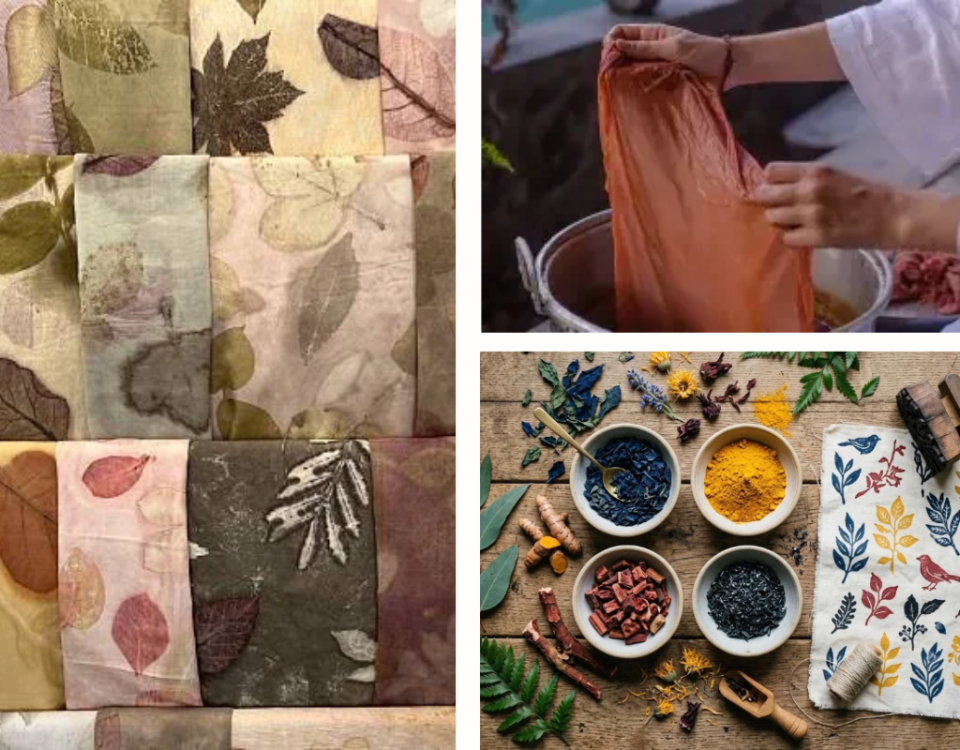
Natural Dyes: 4 Brands Revealing the Hidden Beauty of Fashion
Your clothes have a colour story. Have you ever wondered what it is? That earthy rust kurta you love? Or your favourite indigo shirt? Ever wondered what actually gives them their colour? We spend time checking clothing labels for cotton, linen and organic fabrics, but rarely think about the dyes that bring our clothes to life. And there’s more to the process that meets the eye! Curious about what’s behind your favourite shades? Meet four Indian names bringing a little more nature into the world of fashion!
From Himalayan leaves and roots to discarded temple flowers, onion peels and coconut shells, nature has quite the colour palette. Across India, some brands and studios are finding creative ways to turn these everyday materials into beautiful colour textiles.
Nature’s Palette: Meet the Brands Turning Plants into Pigments
1. Studio Bhamor: When Nature Takes Its Time
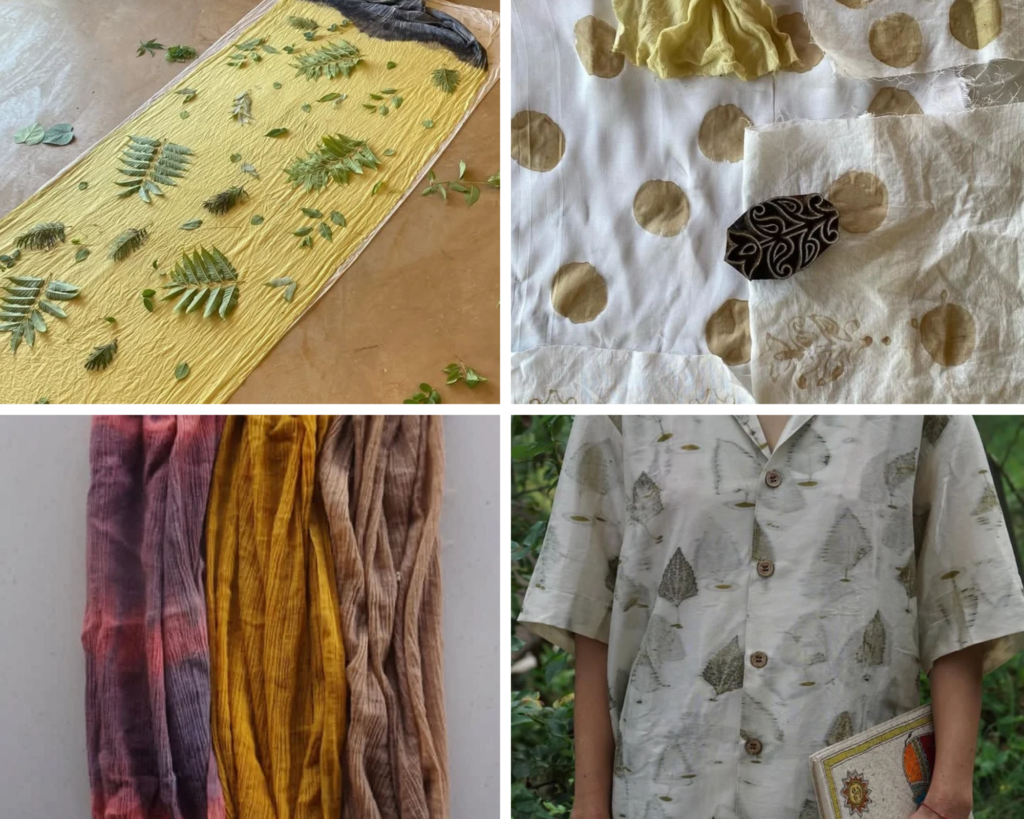
Ten days for a colour? Yes, you read that right!
The Ingredients
At Studio Bhamor, dyeing practice draws on a five-year exploration of mountain ecology, using natural autumn-dried leaves such as Kaakar, Tumb, Tiamuiya and Kala Hisalu to create a rich tannin base. But the interesting part is how these ingredients come together.
Want a complex moody grey? Harad (myrobalan) fruit followed by a treatment with Kasini iron liquor. Together, these ingredients create a shade that simply isn’t picked off a shelf.
The Setup
And the process doesn’t stop there. A single piece of cotton can spend up to ten days moving between different dye baths. From local Eupatorium plant baths to the deep reds of lac and finally an active indigo (Indigofera tinctoria) vat, every stage adds something to the final result
The Payoff
The studio calls the resulting imprint its ‘Shadow Self’, a reflection of the colours and processes inspired by the surrounding forest. Turns out, good things really do take time. And when nature is doing the colouring, there’s no need to rush the process!
The Takeaway
There’s more to a shade that meets the eye! It’s the time, experimentation and craftsmanship that makes every piece special. So the next time you pick an outfit, take a moment to appreciate the story behind its colours, not just how they look!
2. Adam Leaves: Nature Called. It wants to Be Printed on Your Clothes!
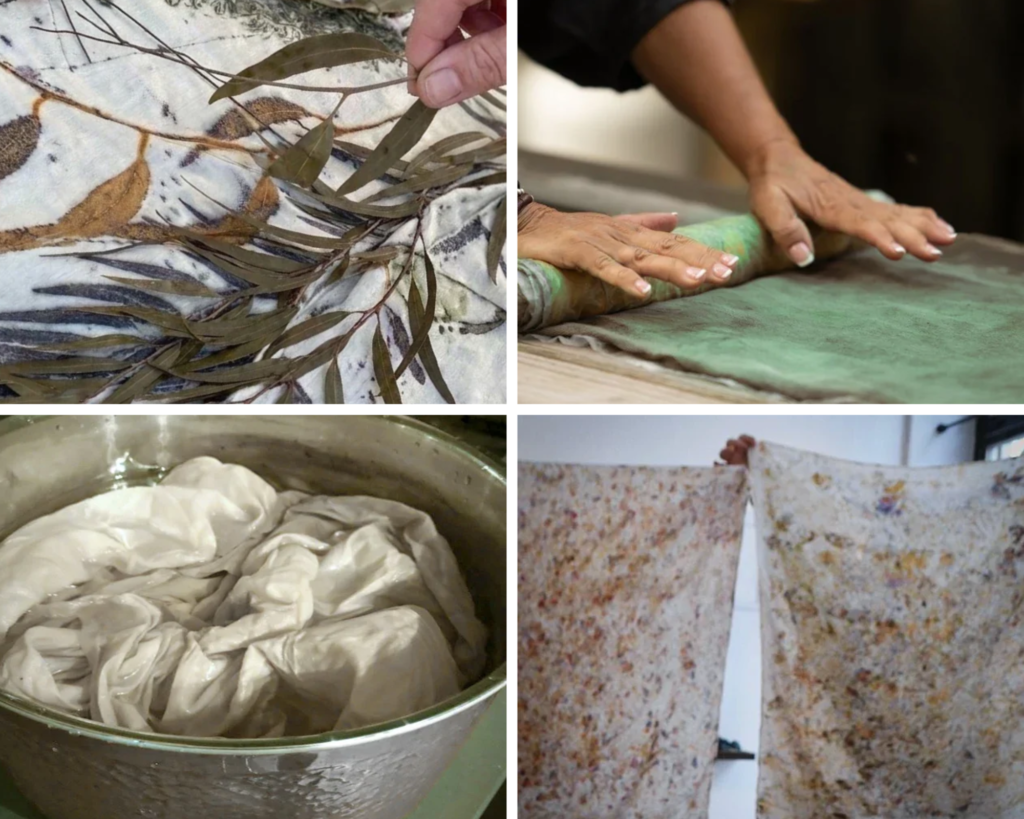
Who needs a printing machine when you have leaves, flowers and steam?
The Ingredients
Adam Leaves explores botanical bundle dyeing, a technique that brings plant materials directly onto fabric to create natural prints. And the ingredients? They’re quite a surprise!
Think madder root for warm reds, turmeric for yellow and pomegranate rinds for golden-grey shades. Even discarded temple flowers, known as Nirmalya, can find a second life.
The Setup
But before the leaves and flowers make their grand entrance, the fabric needs a little prep. It’s scoured to remove natural waxes, treated with tannins and mordanted with mineral salts to help prepare the fibres for dyeing.
Leaves and petals are then arranged directly onto the fabric, which is rolled into a tight bundle and steamed for hours. The heat helps release and transfer the plant pigments onto the cloth, leaving behind delicate shapes, leaf veins and botanical patterns.
The Payoff
No printing plates, just leaves, flowers, heat and a whole lot of nature-inspired creativity. Basically, your next favourite prints could have started as a bouquet of flowers!
The Takeaway
It’s a reminder that creativity doesn’t always need something new. Sometimes, the materials around us already have plenty to offer!
3. Adiv Pure Nature: From Flower Waste to Fashion’s New Colour Palette
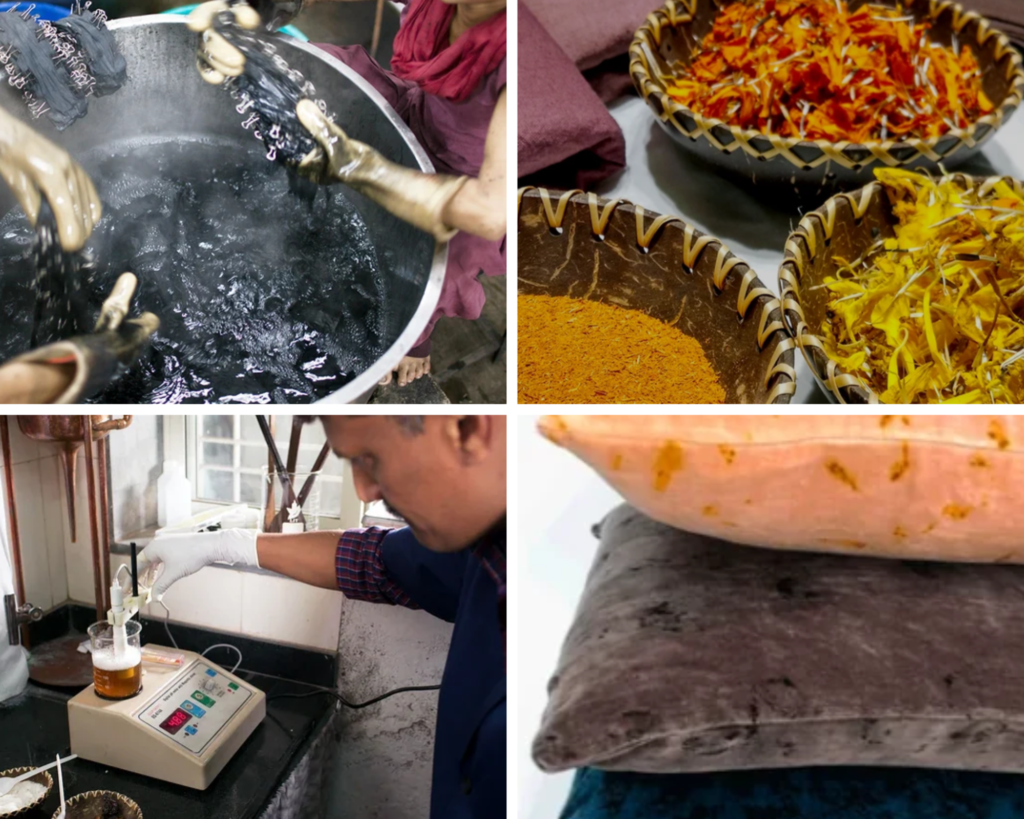
Before you throw away those leftover flower offerings or onion peels, here’s something to think about, they might have more to offer than you realise.
The Ingredients
Adiv Pure Nature explores the use of discarded organic materials as natural dye sources. We’re talking sacred marigolds, hibiscus, onion peels and even coconut shells collected from local street vendors.
The Setup
And the process has an unexpected twist. The dyeing team uses traditional Indian idli steamers to process textiles, adapting an everyday kitchen appliance for something you probably wouldn’t expect. Yes, the same appliance used to make your breakfast!
The Payoff
The larger idea is finding new uses for discarded materials and exploring how everyday waste can be a part of a fabric’s colour story. Who knew your kitchen and wardrobe could have so much in common!
The Takeaway
So, before you toss those flower leftovers or onion peels, think again! What looks like waste today could become tomorrow’s source of colour.
4. Aranya Natural: When the Mountains Decide the Shade
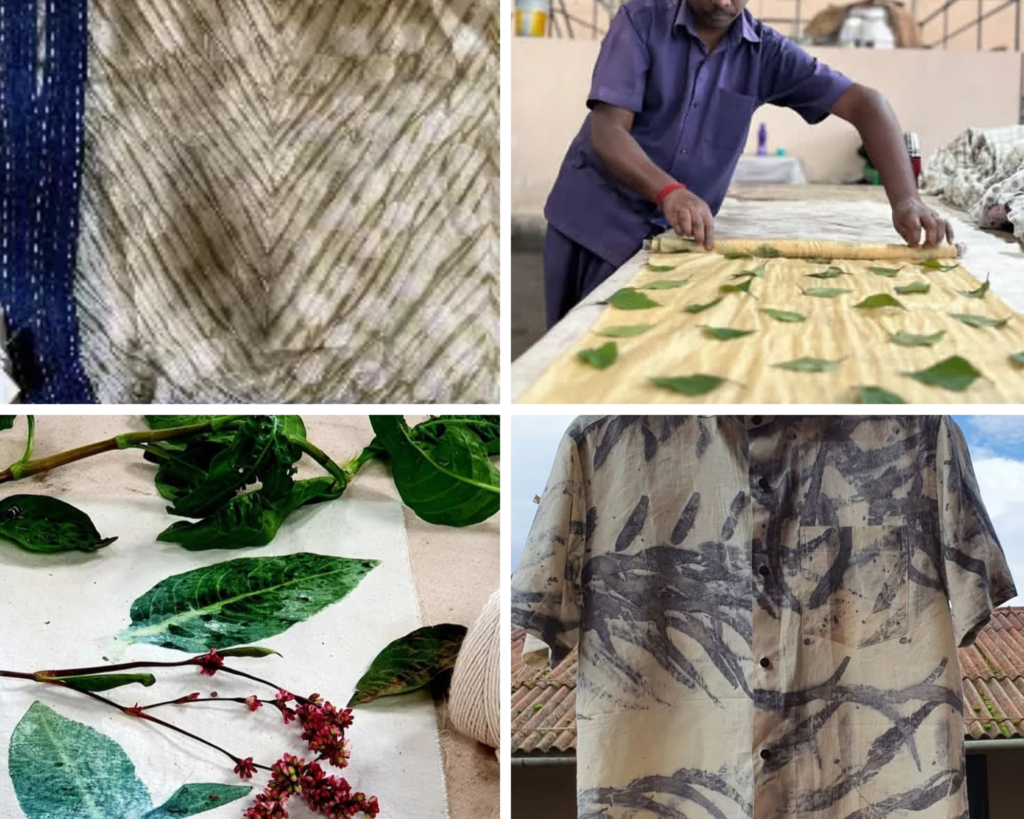
What if the surroundings could influence the colour of your clothes? That’s part of what makes natural dyeing so interesting.
The Ingredients
Aranya Natural’s approach draws on botanical materials such as tea (Camellia Sinensis), eucalyptus, lemongrass and mulberry leaves. These plants offer different possibilities for creating colour, but the final shade isn’t determined by the ingredients alone.
The Setup
The environment plays a role too. Factors such as pH of water, mineral content and temperature variations can influence how a natural dye bath turns out. So, even when the same plants are used, the final shade can have its own little differences.
The Payoff
Instead of chasing perfectly identical colours, natural dyeing leaves room for the subtle variations that come with working alongside nature.
The Takeaway
And that’s the fun of working with nature! Not every shade needs to match perfectly. Sometimes, those little differences are exactly what make a piece stand out.
Every Shade Has a Story and That’s The Beauty of It!
So, the next time you pick an outfit, look beyond the fabric label. Think about the colours too, and the story behind how they got there.
Because not every shade needs to be identical, and that’s the beauty of it! From leaves and flowers to heat and time, natural dyes remind us that colours don’t have to come from a factory-made formula.
After all, why settle for just another shade when you can wear one with a story?
Know any other brands experimenting with natural dyes? Or tried anything from the brands we featured? We’d love to hear about it! Drop your thoughts in the comments.