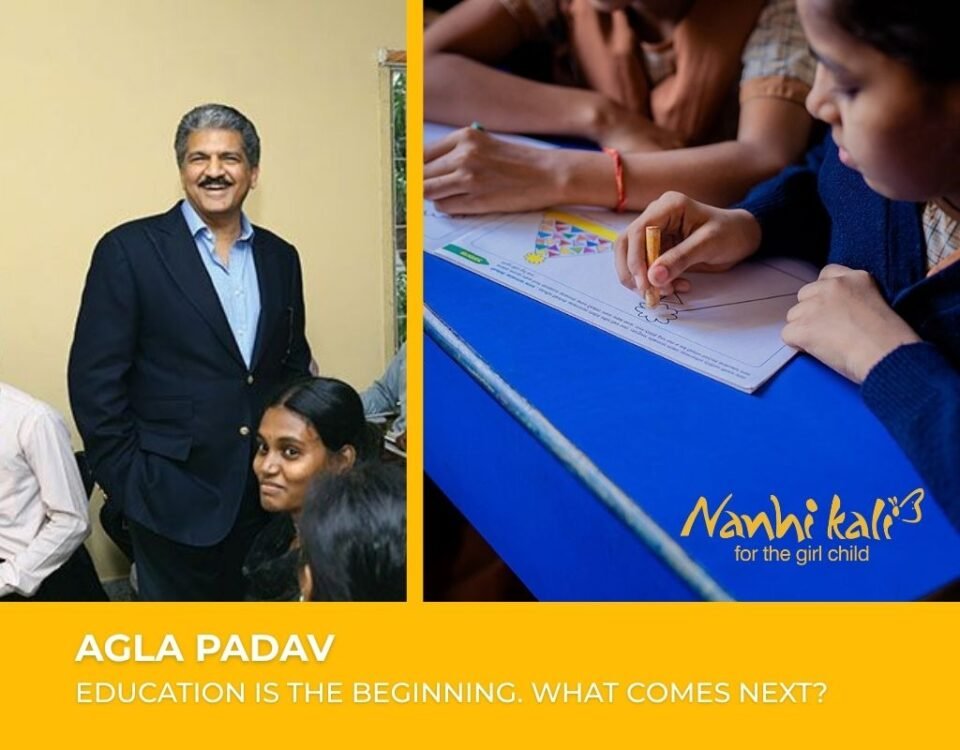
Agla Padav: Her Skills, Her Opportunities, Her Hope and More
What happens when you put sustainability, impact and communication in a room full of future changemakers? Ideas happen. Big ones. That’s exactly what went down this September when Green Pistachio’s founder, Avnee Kokatay, pulled up to St. Xavier’s College, Mumbai. She didn’t drop another snooze-worthy lecture—she came to spill the real tea on how these three engines actually power real-world change. Safe to say, the conversation sparked something. One student, Ishan Philip, took that spark and turned it into a thoughtful, curious piece that made us pause, think, and go, “Okay, this deserves a bigger audience.” So, here we are.
Nanhi Kali: What’s The Story?
Anand Mahindra recognised that the lack of education for girls was intrinsically linked to other social issues plaguing India. His vision that empowering girls would not only lead to economic growth but also to a more equitable and progressive society inspired the launch of Project Nanhi Kali.
Such a vision is grounded in hard evidence. According to the World Bank, restricted access to education for girls leads to a loss of US 15 trillion and US 30 trillion in human capital wealth for countries worldwide. Additionally, it is known that increased investment in secondary education produces extraordinary societal returns:
- Elevated Earnings & Growth Rates: Substantially increase the earnings of girls receiving such education, thus contributing to overall GDP growth of a country.
- Improved Health Indicators: Reduction in the number of cases of child stunting, child and maternal mortality.
- Societal Empowerment: Lower incidence of child marriage and reduced socio-economic inequalities through enhanced social mobility.
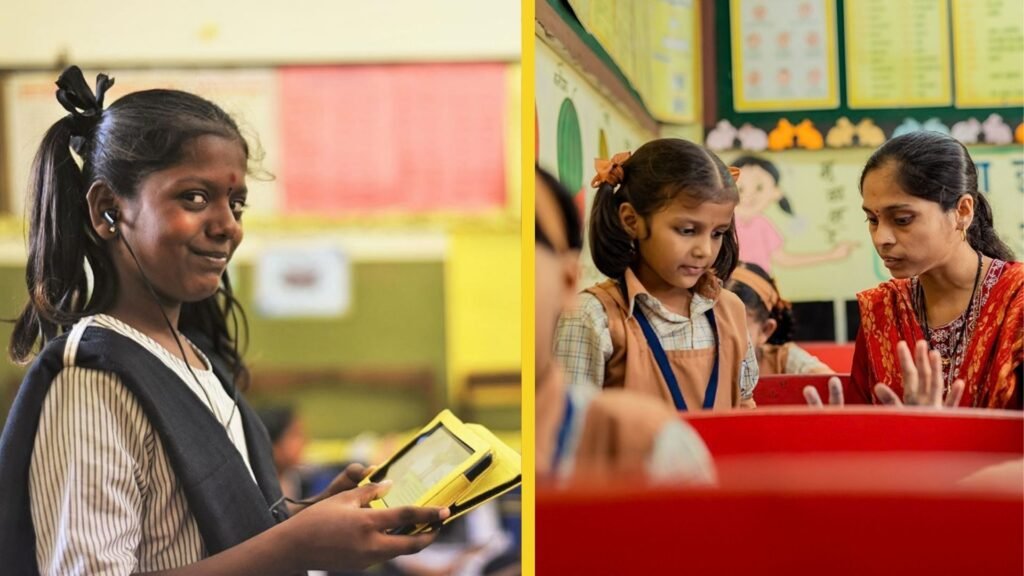
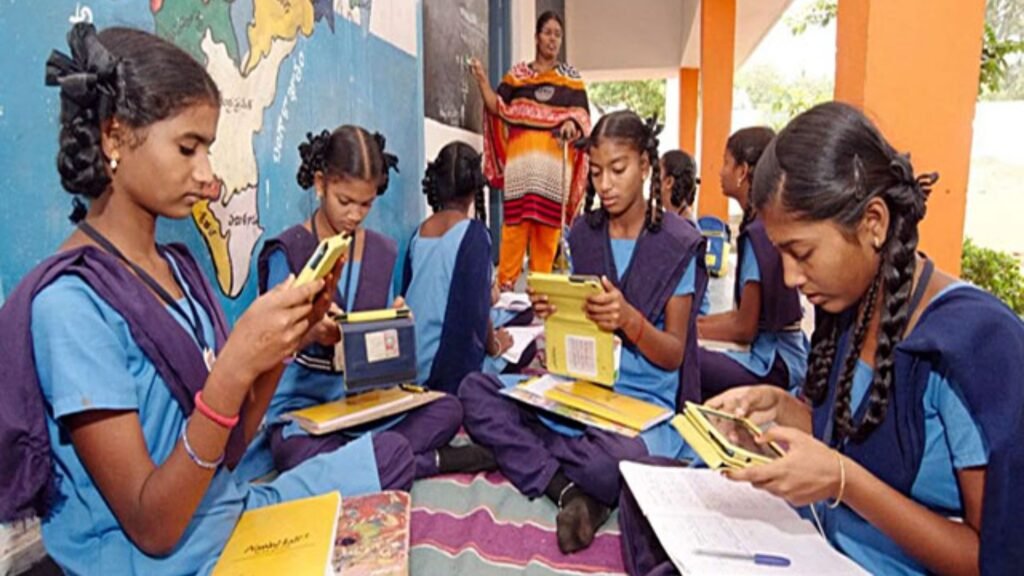
Project Nanhi Kali goes far beyond the provision of school education; it encompasses academic tutoring, 21st-century skills, digital and financial literacy, life skills, sports leadership, and employability programs. Nevertheless, secondary education is merely a starting point in a girl’s life. As per UDISE+ 2023–24 statistics, the transition rate in India from secondary to higher secondary education for girls stands at a mere 73.9% as against 82.9% from upper primary to secondary.
The higher secondary stage of education becomes critical since it transitions a learner from school to work and from being a novice to becoming an expert in higher education. Key skills such as academic excellence, analytical and critical thinking, and fact-based decision-making are developed at this crucial stage. Moreover, the adolescent gains independence, autonomy, adaptability, and identity formation in higher secondary education, enabling them to become self-sufficient adults. Employability and socioeconomic status are substantially influenced by higher secondary education.
According to the International Monetary Fund, each additional year of education increases an individual’s earnings by 6–7%. Meanwhile, formal skills training leads to an impressive increase of 18.5% in earnings and significantly higher chances of getting a job.
Core Story Premise:
Nanhi Kali helps a girl reach the classroom and build critical skills, but the journey must continue into higher education, vocational training, meaningful employment, and total financial independence.
Agla Padav: Who’s It For?
- Primary Audience: Girls approaching the end of secondary school, particularly those from underserved communities facing systemic barriers to higher education or workforce entry.
- Secondary Audience: Parents and community leaders who influence crucial educational decisions, as well as college students, mentors, corporate employers, and institutional partners who hold the key to creating post-school opportunities.
The campaign bridges two distinct viewpoints at once: the girl asking ‘What comes next for me?’ and society, which holds the responsibility and role in making that next opportunity possible.
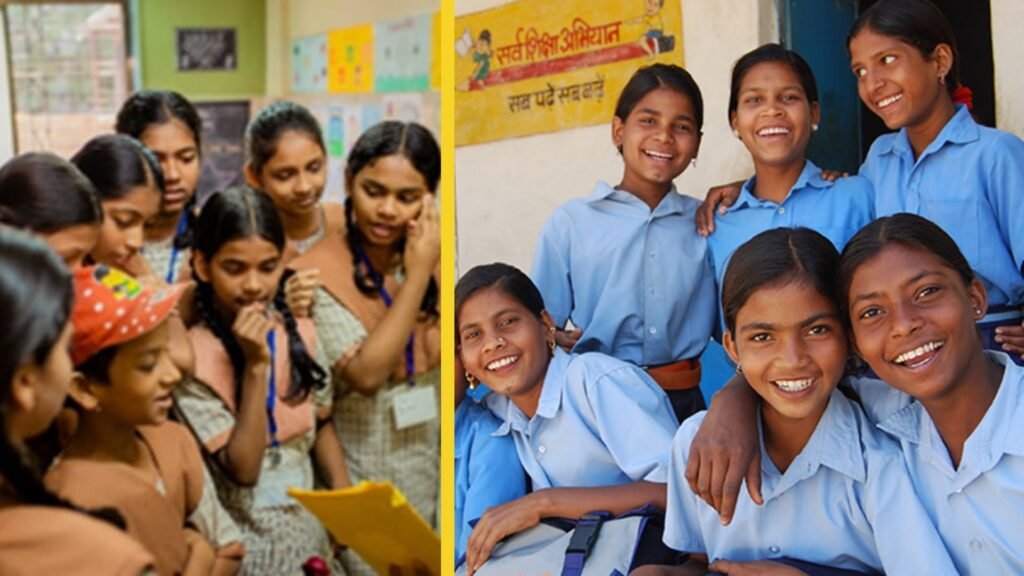
What’s The Big Idea?
The campaign is named AGLA PADAV (Hindi for ‘The Next Stage’ or ‘The Next Stop’). The phrase reframes a girl’s basic education from a final destination into an ongoing journey:
Education → Skills → Opportunity → Independence
To understand why this sequence is crucial, we must examine how each milestone transforms both the individual girl and the society around her:
1. Education
- How it helps the girl: Basic schooling grants her fundamental literacy, numeracy, and a sense of dignity. It teaches her that she has a voice, a mind of her own, and rights equal to anyone else.
- How it helps society: Educated girls marry later, have healthier children, and break generational cycles of illiteracy. Basic education reduces maternal mortality and creates a healthier, more conscious population.
2. Skills
- How it helps the girl: Transitioning into digital literacy, 21st-century problem-solving, financial awareness, and critical thinking transforms basic education into functional capability. It gives her confidence and practical ability.
- How it helps society: A skilled workforce elevates overall productivity. Rather than remaining dependent or restricted to low-wage informal work, skilled women contribute to formal economic output and innovation.
3. Opportunity
- How it helps the girl: Skills are useless without access. Providing college access, vocational training, apprenticeships, and mentorship bridges the gap between learning and real-world application, preventing her talent from being wasted.
- How it helps society: Opening doors to young women dismantles socio-economic inequality and boosts GDP. It stops the massive national loss of productivity highlighted by the World Bank (15T–30T globally).
4. Independence
- How it helps the girl: Earning her own income gives her complete agency—the power to make decisions about her life, health, marriage, and finances. She becomes the author of her own destiny.
- How it helps society: Financially independent women reinvest up to 90% of their income back into their families and communities. They elevate living standards, lift families out of poverty, and serve as visible role models for generations of girls to follow.
How Will We Get People To Care?
Why this initiative creates lasting emotional resonance rather than being forgotten like typical CSR campaigns:
Most CSR campaigns fail to leave a lasting impression because they feel distant and transactional. They rely on abstract statistics or dramatic charity appeals that people quickly tune out. Agla Padav connects directly to a deeply personal, shared human experience in almost every Indian household.
Almost every middle-class and affluent household in India grew up with a domestic househelp who brought her daughter along to work. We remember playing with her, sharing snacks, or studying at the same dining table when we were children.
As the years passed, our paths diverged sharply through no fault of her own:
- Our path: We went off to high school, coaching classes, university degrees, and corporate jobs, building independent careers.
- Her path: She managed to finish 10th grade, but then the support stopped. Without a bridge to higher education or job opportunities, she was forced to follow her mother’s exact footsteps into informal domestic labour—not due to a lack of talent, but due to a lack of an ‘Agla Padav’ (the next step).
When people see this contrast, it hits home immediately. It stops being about ‘helping underprivileged strangers’ and becomes about a girl we actually knew—a girl who had the same potential as us, but lacked the bridge to realize it.
This powerful narrative reframes the issue from pity to a question of fairness and opportunity. It makes the audience reflect on their privilege and motivates them to help build that missing bridge for the next generation of girls.
Emotional Resonance:
By connecting the campaign to a memory everyone holds, Agla Padav makes girl child empowerment deeply personal, emotional, and impossible to forget.
Education opens the door, but real-world skills and opportunities are what actually change the game. Without an Agla Padav, raw potential might just gets left behind.
What’s your take? How can we help build these missing bridges for young women starting out? Drop your thoughts in the comments, share the read, and let’s keep the momentum going!
About the Author
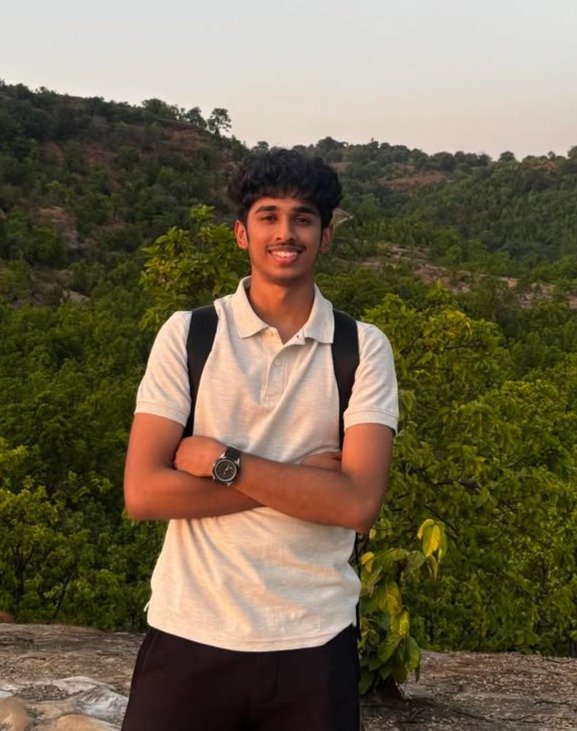
Ishan Sherin Philip is pursuing a Bachelor’s degree in Accounting and Finance at St. Xavier’s College, Mumbai. He aspires to build a career that combines his knowledge of finance with his passion for contributing to a more sustainable future.