Rainwater Harvesting Revisited: How To Make Every Drop Count
We have a slightly awkward relationship with rain. We spend summers begging for it, complain about it during the monsoon, and then happily watch millions of litres disappear down the nearest drain. But what if your roof could double up as a water tank? Or your balcony could become a tiny rain-catching station? Sounds ambitious, but rainwater harvesting doesn’t require a fancy setup or an engineering degree. Your roof, balcony or even a patch of land can become a mini water-saving system. So, let’s revisit three simple ways to harvest rain—and stop letting perfectly good water wash away.
Rainwater Harvesting Isn’t New. So, What’s Changed?
Rainwater harvesting is hardly a new idea. Our grandparents’ homes, old stepwells, tanks and traditional water systems were built around the simple wisdom of catching rain when it came and saving it for when it didn’t. So, if we’ve known how to do this for centuries, why does it still feel like a revolutionary idea?
Well, over time, we covered more and more of our cities in concrete, giving rainwater a very efficient exit strategy: straight into the drain. At the same time, we started drawing more water from underground to keep up with growing demand. Basically, we made it harder for rain to stick around while getting better at using up the water we already had. Maybe it’s time we gave those raindrops somewhere to stay.
And no, we don’t need to build a stepwell in the backyard to turn things around. Here are three simple ways to catch the rain, wherever you live.
3 Ways to Make Every Drop Count
Now that we’ve decided to give those raindrops a place to stay, the next question is: where? Thankfully, rainwater harvesting doesn’t come with a one-size-fits-all rulebook.
Rooftop Rainwater Harvesting
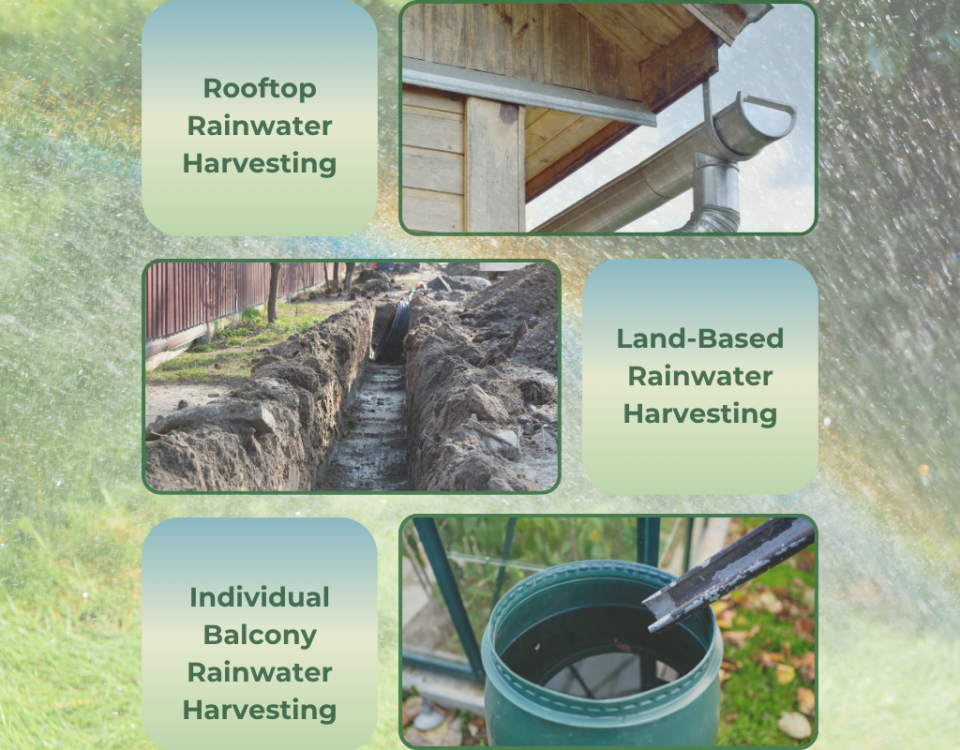
Starting from the top—literally—rooftop rainwater harvesting is one of the simplest ways to collect what falls on your home. The water can be channelled into storage or directed underground to help recharge groundwater. And it doesn’t have to be a complicated setup. A few pipes, some filtration system and the right storage can get you started. Here’s a practical example of the process, including the materials and maintenance involved.
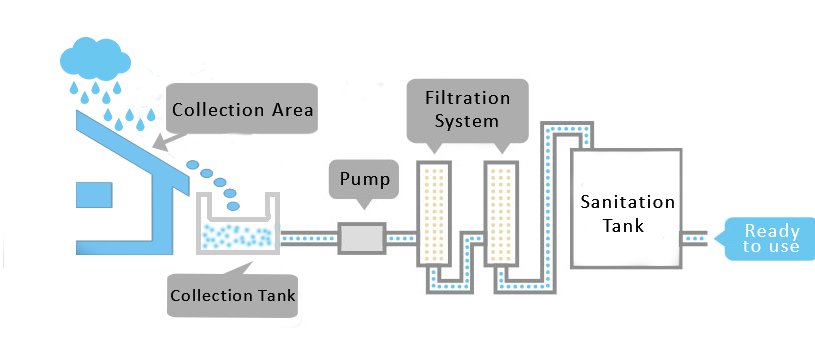
Image Source: Akruthi Enviro Solutions
Land-Based Rainwater Harvesting
This RWH method focuses on slowing down and capturing the rainwater that flows across open ground. There’s no complex setup here either. Depending on the terrain, rainwater can be managed through farm ponds, check dams, contour bunds or percolation tanks. It’s particularly useful in farms and rural areas, where managing runoff can help keep more moisture in the soil, reduce erosion and give water more time to seep down and recharge groundwater.
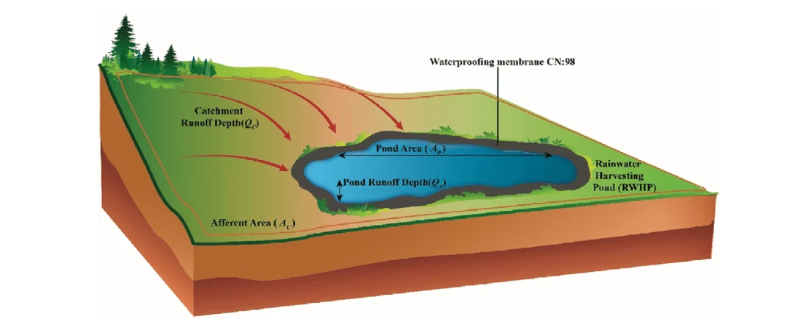
Image Source: ResearchGate
Individual Balcony Rainwater Harvesting
Living in an apartment doesn’t mean you have to sit this one out. Your balcony may not have the catchment area of a rooftop, but it can still collect a useful amount of rainwater. Individual balcony rainwater harvesting works on a simple principle: catch the water coming through the existing outlet instead of letting it disappear down the drain. A pipe can direct the flow into a drum or container, while a cloth or basic filter at the outlet helps keep out leaves and debris.
Chennai resident Dayanand Krishnan used a similarly simple RWH setup and managed to collect 225 litres in 10 minutes of rain from a 400 sq ft rooftop. And the setup doesn’t need to burn a hole in your pocket either. Dayanand says his entire system costs just ₹150 and could be installed at home. So, while your balcony may not catch as much rain as a rooftop, getting started doesn’t have to be a major project—or a major expense.
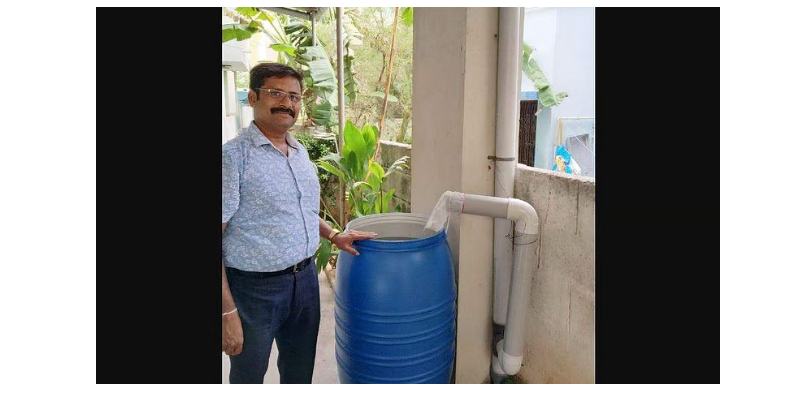
Image Source: The New Indian Express
A Little More Rain, A Little Less Waste
So whether the rain lands on a rooftop, runs across a field or finds its way onto a balcony, there are ways to make it stick around a little longer. The method may change depending on where you live, but the basic idea stays the same: don’t let useful rain disappear before we’ve had a chance to use it or put it back into the ground.
And when enough people do that, the impact starts looking very different. Less water rushing away, more being stored, reused or allowed to seep into the ground. Over time, these small changes can take some pressure off the water sources we already depend on.
And this is exactly how we can make every drop count—one raindrop at a time.
So, which one would you try? Drop your pick in the comments, share this with a fellow rain-lover, and tag someone who’s already giving rainwater a second life.